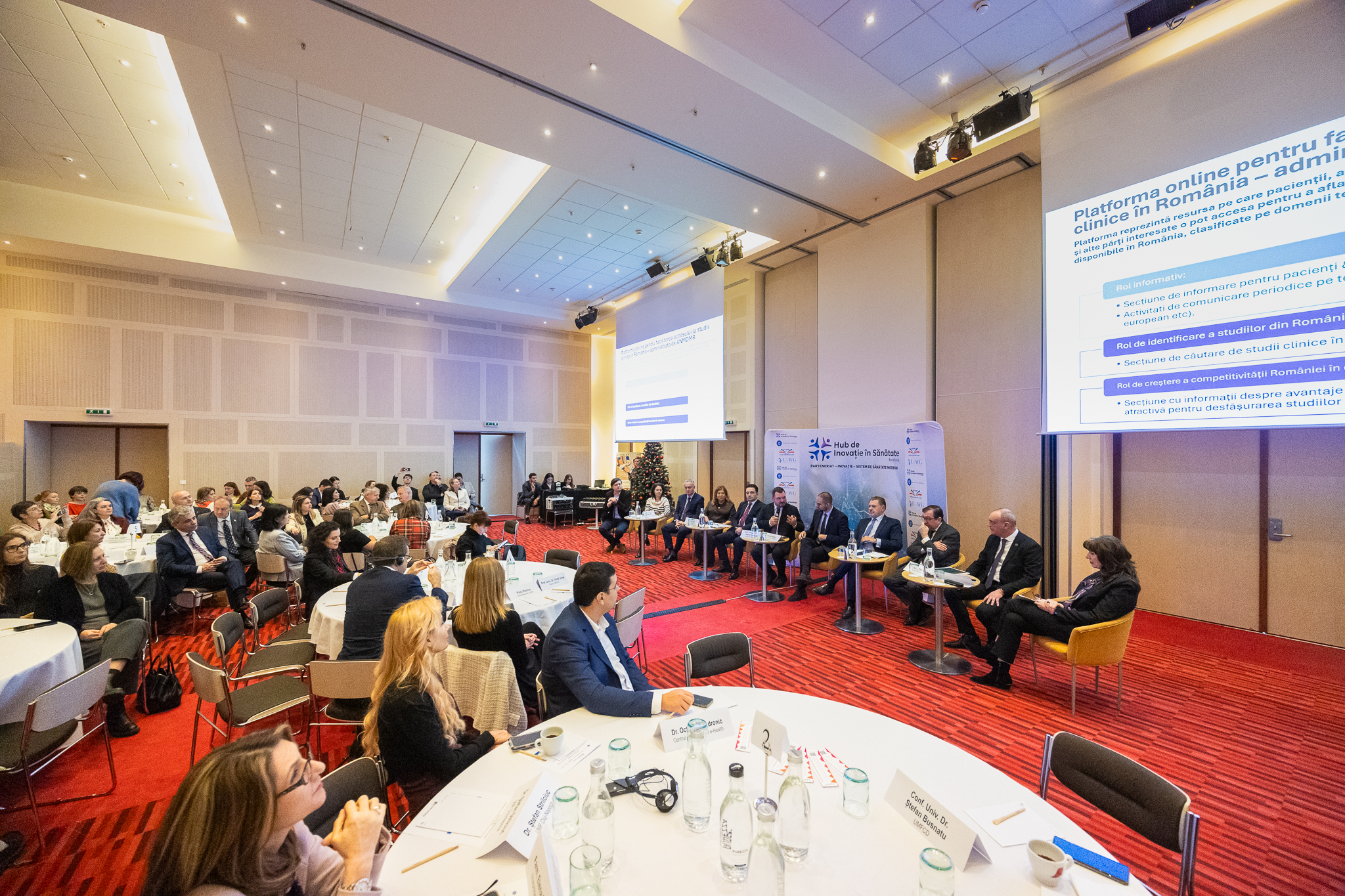


“Health Prevention: An Analysis of Perceptions and Behaviors in Romania”
This is one of the most comprehensive studies on Romanians’ perception of their own health status and access to prevention services, conducted at a national level under the academic coordination of the G.E. Palade University of Medicine, Pharmacy, Sciences and Technology in Târgu Mureş and the Health Innovation Hub.
“When UMFST ‘G.E. Palade’ from Târgu Mureş accepted the academic coordination of this study, we did so because a modern university cannot stay behind the data — it must be where the questions are formed, not just where answers are published. Health prevention is not a medical topic; it is a societal one. This study proves something important beyond its data: that academia, industry, and research expertise can work together with a real purpose. The results are today in front of decision-makers who have the power to turn conclusions into policies.
— Prof. Dr. Leonard Azamfirei, Rector of UMFST G.E. Palade in Târgu Mureş
Prevention is an essential tool that can detect and address in time many diseases with major societal impact, as well as a key instrument for reducing costs in the healthcare system. This initiative comes in a context where non-communicable chronic diseases are a major challenge in Romania, causing 2.5 times more deaths from treatable causes than the European Union average. At the same time, prevention services available in Romania have been significantly expanded, allowing both insured and uninsured individuals access to free consultations and medical tests aimed at early detection of serious diseases.
“Prevention does not only mean targeted actions for early detection of non-communicable diseases. It means, above all, health education, developing preventive behaviors from childhood, and building the ability to distinguish between accurate information and fake news, which has flooded the digital space. Prevention also relies on strengthening trust in health authorities and leading professional voices, who can inform correctly and contribute to educating patients. We hope today’s meeting has laid the groundwork for a partnership with members of the legislature to develop an integrated strategy on health education and prevention for the benefit of patients and society as a whole.
— Prof. Dr. Alexandru Rafila, President of the Health and Family Committee in the Chamber of Deputies
“This is the first project within the Health Innovation Hub’s pillar dedicated to education and prevention of non-communicable chronic diseases that generates concrete results and can support public policies aimed at increasing patient access to prevention services. This study developed by the Hub responds to the Ministry of Health’s initiative to create a national screening and prevention strategy. Healthcare systems in Europe generally face many challenges caused by an aging population, the growing burden of chronic diseases, and the disconnect between primary and secondary or tertiary care. The way health systems are structured is itself a challenge — they don’t target prevention or education enough, but rather curative care. Romania ranks first in the EU in avoidable mortality and most deaths are caused by chronic diseases. We need to use prevention as a proactive tool that can detect and address in time many diseases with major societal impact, and as an essential instrument for reducing healthcare costs.
— Radu Răşinar, Vice President of the Local American Working Group (LAWG), founding member of the Health Innovation Hub
The study identifies differences between the population’s intentions and actual use of preventive services. It highlights systemic and behavioral barriers that prevent the optimal use of prevention services, as well as the information sources patients rely on.
“Prevention is a shared responsibility that requires multiple efforts: public institutions must monitor data and modernize the social health insurance system; doctors in contractual relationships with the House must know they are obliged to provide services from both the basic and minimal packages; and the population must know that they have rapid access to these investigations. Access to prevention services in the public system is free. Prevention, early disease detection, and caring for one’s own health are the only winners in adding healthy years to life.
— Larisa Mezinu-Bălan, Vice President of the National Health Insurance House (CNAS)
What Respondents Understand by Prevention
- At a declarative level, prevention is understood as adopting a healthy lifestyle, complemented by regular health check-ups through periodic medical tests and consultations. These measures are perceived as fundamental for maintaining health and preventing the onset of long-term conditions.
- For most Romanians, prevention means ‘getting tests now and then,’ usually triggered by the appearance of symptoms or a doctor’s recommendation. This reactive approach limits the effectiveness of prevention and delays early interventions.
- Most respondents have a functional but partially limited understanding of the medical system and the types of medical services available for prevention.
- The most commonly used prevention actions are periodic medical tests or check-ups (70%), routine dental check-ups (43%), occupational medicine (36%), vaccination (23%), and psychological assessment (15%).
- 12% have not used preventive services in the last two years, indicating reactive behavior triggered by symptoms.
- The use of preventive services, including vaccination and occupational medicine, varies significantly depending on the level of health literacy.
“The study shows that prevention is not a matter of perception, but of organization. There is interest, but clear pathways and mechanisms that would turn prevention into a predictable behavior are lacking. The priority is to integrate prevention as a functional part of the health system, not just as a one-off initiative. The Health Innovation Hub aims to transform such initiatives into tools for developing more effective public policies that are better grounded in field reality.
— Dr. Teodor Blidaru, Project Manager of the Health Innovation Hub
Where Prevention Takes Place
- Prevention services are used in similar proportions in both the public and private systems: through private hospitals and clinics (52%), family medicine polyclinics and practices (50%), and public hospitals (36%), suggesting complementary use of both systems.
- 83% of people use occupational medicine at least once a year, making the workplace one of the most effective channels for accessing prevention.
- 36% of respondents report having accessed prevention services in public hospitals.
- Only 6% have used mobile campaigns, highlighting the great potential for community interventions.
- 14% of respondents access prevention services through private health insurance, and 10% through subscriptions to private clinics.
- 13% of people carry out prevention activities through free campaigns organized by authorities.
- In urban areas, access to prevention services in the public system is perceived as relatively efficient, especially when a family doctor guides the patient and there is no emergency pressure. In rural areas, access through the public system is perceived as more difficult and harder to manage, characterized by long waiting times and various accessibility barriers.
- People in rural areas use preventive services significantly less, especially dental check-ups, vaccination, and occupational medicine.
“I congratulate UMFST and the study’s initiators for supporting health policies with this data. In recent years, much progress has been made regarding prevention at the national level. There are many packages, but not many people access these preventive exams in a subsidized regime. Education about prevention and creating a framework that encourages prevention-oriented behavior are also important.
— Luminița Vâlcea, President of the Coalition of Patient Organizations with Chronic Conditions in Romania (COPAC)
“The Hub is the first broad partnership initiative in healthcare that works and generates concrete results. The prevention study shows us what we already knew: patients who want to access prevention services face long waiting times. Information campaigns are useful, but we sometimes face the difficulty of getting people to process the information and change their behavior. Mobile health caravans are also effective tools, but they need to be complemented by a monitoring system to ensure that the recommended tests are actually carried out by the patient. Often, patients’ fear of diagnosis is one of the factors that delays their visit to the doctor, and this is a major challenge because it limits people’s access to effective prevention programs.
— Rozalina Lăpădatu, President of the Association of Patients with Autoimmune Conditions (APAA)
Barriers to Prevention
- The main barriers reported by study participants are: high costs (51%), long waiting times for appointments (48%), complicated administrative procedures (48%), lack of trust in the quality of medical services (32%), previous negative experiences with the health system (31%), lack of information on how to access services (29%), lack of availability of necessary specialists (29%), and long distance to the medical facility (21%).
- Beyond costs and administrative issues, the fear of receiving an unfavorable diagnosis leads to postponing or avoiding preventive check-ups, even among people who declare that prevention is important.
- Early education plays an essential role in forming healthy long-term habits. Messages conveyed early on have a significant impact on attitudes toward prevention.
- 56% of respondents found access to prevention services fairly easy, while approximately 30% encountered difficulties.
- Data shows that the population recognizes the importance of prevention, but the lack of clear pathways and predictable information turns prevention into a fragmented and reactive experience.
“People need institutional mechanisms that make prevention accessible and predictable. We observe from the study that prevention operates within a mixed ecosystem — public and private — in which employers and voluntary health insurance play an increasingly important role. In the coming period, it is essential to accelerate this mixed model, which offers solutions for the three main barriers to accessing prevention services: costs, long waiting times, and complicated administrative procedures. Close collaboration between the public and private sectors, through strong partnerships among all system actors, is what creates more access options to prevention services so they become a common practice in the health system.
— Alexandru Ciuncan, President of the National Union of Insurance and Reinsurance Companies in Romania (UNSAR)
Perception of One’s Own Health Status
- More than half of Romania’s population (51%) reports suffering from a chronic disease, the most frequently mentioned conditions being cardiovascular diseases (19%), osteoarticular conditions (17%), gastrointestinal diseases (11%), and metabolic diseases (10%).
- The main risk factors reported are smoking (31%), unhealthy diet (29%), and sedentary lifestyle (23%).
- The high prevalence of chronic diseases indicates a significant future cost for the healthcare system.
The Family Doctor as the Pivot of Preventive Behavior
- The family doctor is the most trusted source for preventive medical decisions, influencing patient behavior.
- 53% of respondents access preventive services based on their doctor’s recommendation, highlighting the family doctor’s pivotal role in prevention.
- The involvement of the family doctor in promoting prevention increases the effectiveness and accessibility of preventive medical services.
Information Sources for Patients
- The most trusted information sources are family doctors, pharmacists, and information available online on private clinic websites.
- Family doctors, online information, and family are the main information sources. In addition, patients also get information from public figures with medical expertise or from social media platforms.
- Traditional and institutional information channels are rarely used, while digital platforms and short-form content formats are preferred.
- For a significant portion of the population, Google (79%) and digital tools including AI agents (31%), YouTube (24%), and social networks (20%) represent the first point of contact with medical information, ahead of interaction with a doctor or pharmacist.
Methodology
The research was conducted with the technical support of ISRA Center Marketing Research, between September and November 2025, on a nationally representative sample, with participation from people aged 20 to 65, using a combined qualitative and quantitative methodology for an in-depth and representative data analysis.
Partners
The study was developed with the support of partners AbbVie, AstraZeneca, Boehringer Ingelheim, Novartis, Pfizer, Roche, LAWG, and UNSAR.
More information: https://hubinovatie.ro/